Top .300 Blackout AR Pistol Guns for 2025 – Performance & Buying Insights
Posted by Mandu Moses on Jan 2nd 2026
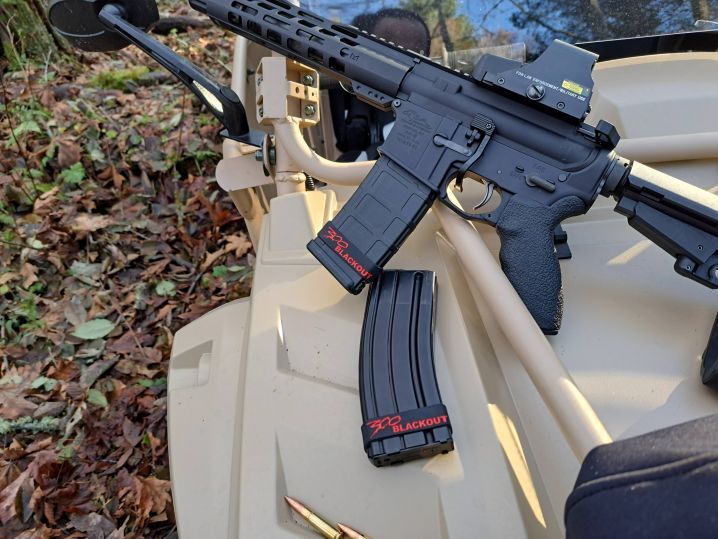
The .300 Blackout (300 BLK) isn’t just another cartridge—it’s a tactical Swiss Army knife. Born from the mind of Advanced Armament Corporation (AAC) in 2011, this round was engineered to solve a problem: delivering .30-caliber power in an AR-15 platform without sacrificing magazine capacity. Fast-forward to 2025, and its versatility has made it a staple for everyone from SWAT teams to suburban preppers.
Why It’s Thriving in 2025:
-
Suppressor Boom: With the NFA eForm 4 process now taking just 30 days (thanks to ATF digitization), suppressors are mainstream. The .300 BLK’s subsonic performance shines here, making Hollywood-quiet home defense a reality.
-
Ammo Availability: Brands like Hornady and Sig Sauer now offer affordable frangible and polymer-tipped rounds, reducing training costs.
-
Regulatory Resilience: Despite ATF turbulence, the AR pistol market has adapted with compliance-ready designs (e.g., non-brace “pistol rods”).
With evolving ATF regulations, new models flooding the market, and advancements in firearm tech, choosing the right .300 BLK AR pistol or rifle can feel overwhelming. This guide cuts through the noise, reviewing the top 7 models for 2025, breaking down their pros/cons, and answering critical questions about legality, performance, and value.
Legal Considerations in 2025: Pistol Braces & Suppressors
The Status of Pistol Braces
ATF’s 2023 Rule Overturned (As of Late 2023):
-
The Fifth Circuit Court of Appeals vacated the ATF’s 2023 pistol brace rule in Mock v. Garland, declaring it unlawful.
-
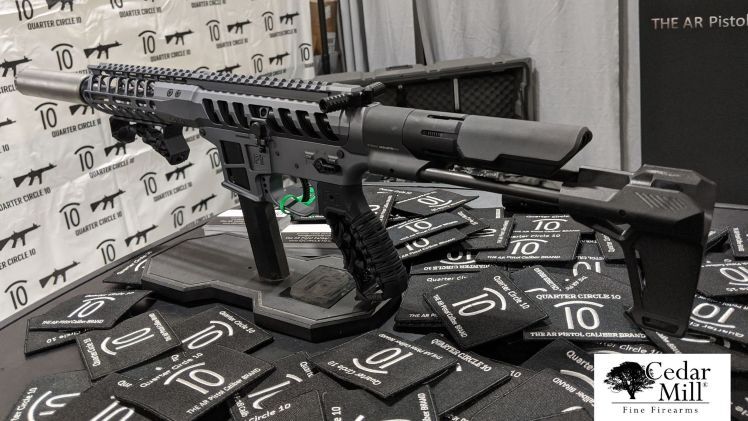
Current Federal Status (2025): Pistols with stabilizing braces are no longer classified as SBRs under the NFA, reverting to pre-2023 guidelines. Owners are not required to register, modify, or surrender braced pistols unless state laws dictate otherwise.
Key Compliance Notes:
-
While federal enforcement is halted, retain documentation (e.g., brace purchase receipts, and firearm configuration details) in case of legal shifts.
-
Monitor ongoing litigation, as the DOJ may appeal to the Supreme Court or pursue new rulemaking.
State vs. Federal Law
Ban States (CA, NY, IL, etc.):
-
State assault weapon bans still apply. AR pistols (braced or unbraced) remain restricted.
-
Compliance strategies like fixed-magazine builds or featureless grips are critical to avoid state-level charges.
“Freedom States” (TX, FL, etc.):
-
States like Texas (HB 957) continue symbolic resistance to federal overreach, but federal law currently aligns with state positions post-Mock.
-
Possession of braced pistols is federally legal, but stay informed—state legislatures may adjust laws in response to federal changes.
Suppressor Laws
Federal Outlook:
-
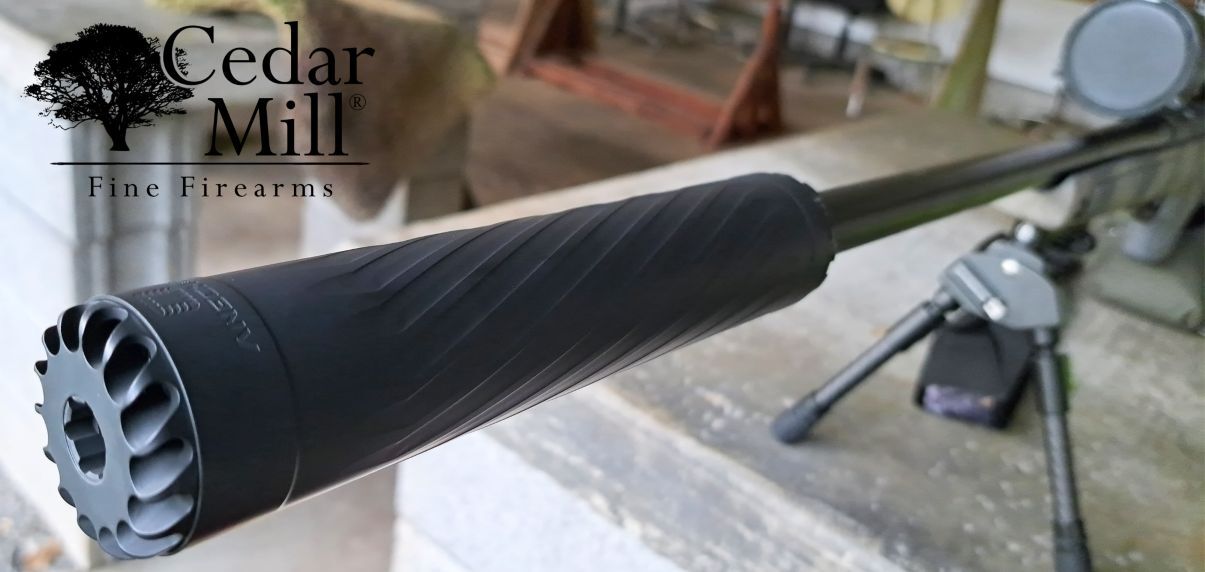
Hearing Protection Act: Still stalled in Congress. Suppressors require a $200 tax stamp, ATF approval, and a months-long wait (Form 4).
-
State-Level Bans: Suppressors remain illegal in CA, NY, IL, DE, HI, RI, and VT.
Suppressor Hunting:
-
Legal in 41 states (e.g., TX, FL, GA). Verify local game regulations for caliber or decibel restrictions.
What to Expect in 2025 and Beyond
Legal and Political Dynamics:
-
Judicial Uncertainty: The Supreme Court could review Mock v. Garland, potentially reinstating the ATF’s rule.
-
Legislative Action: Congress may revive the Pistol Brace Protection Act to codify braces as legal, though bipartisan support remains unclear.
-
ATF Strategy: The agency might propose revised rules targeting braces under a new framework, sparking fresh legal battles.
Proactive Steps for Owners:
-
Stay Informed: Follow updates from organizations like FPC (Firearms Policy Coalition) and GOA (Gun Owners of America).
-
Use Compliance Tools: Platforms like GunPolicy.org provide state-specific checklists to navigate evolving laws.
-
Avoid “Gray Areas”: If attaching a brace, ensure your build aligns with both federal and state definitions of a pistol (e.g., no vertical grips, barrel <16”).
Pro Tip: Use online tools like GunPolicy.org to generate a state-specific compliance checklist.
How to Choose Your .300 BLK AR in 2025
-
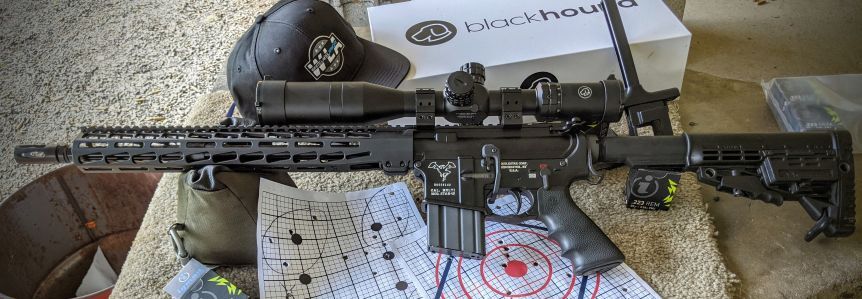
Barrel Length Selection for Performance and Application
-
7” Barrels:
-
Use Case: Ideal for close-quarters combat (CQC) or compact vehicle operations due to minimal footprint.
-
Ballistics: Generates velocities around 1,900 fps with supersonic ammunition, balancing maneuverability with terminal effectiveness at short ranges.
-
Limitations: Significant velocity drop compared to longer barrels; suboptimal for hunting beyond 100 yards.
-
10.5” Barrels:
-
Sweet Spot: Delivers ~2,200 fps with 110-grain supersonic rounds, maintaining compactness while improving ballistic efficiency.
-
Versatility: Suitable for home defense, mid-range engagements, and suppressed shooting with subsonic loads.
-
16” Barrels:
-
Hunting Optimization: Achieves up to 2,350 fps, extending ethical deer-hunting ranges to 200+ yards.
-
Ammo Matching: Longer dwell time improves consistency with heavier subsonic rounds, though subs may exhibit wider groupings (e.g., 3 MOA vs. 1.2 MOA with supers).
-
Gas System Dynamics and Tuning
-
Pistol-Length Gas Systems:
-
Subsonic Synergy: Shorter systems pair well with low-pressure subsonic ammo, reducing bolt velocity and enhancing reliability.
-
Supersonic Challenges: Risk of overgassing with high-pressure rounds; mitigated via adjustable buffers or spring upgrades.
-
Adjustable Gas Blocks (AGBs):
-
Suppressor Use: Critical for managing increased backpressure when suppressed. AGBs fine-tune gas flow to reduce recoil and wear.
-
Factory-Tuned Exceptions: Platforms like the Sig MCX or LWRC DI often include proprietary gas systems optimized for varied ammo types without AGBs.
-
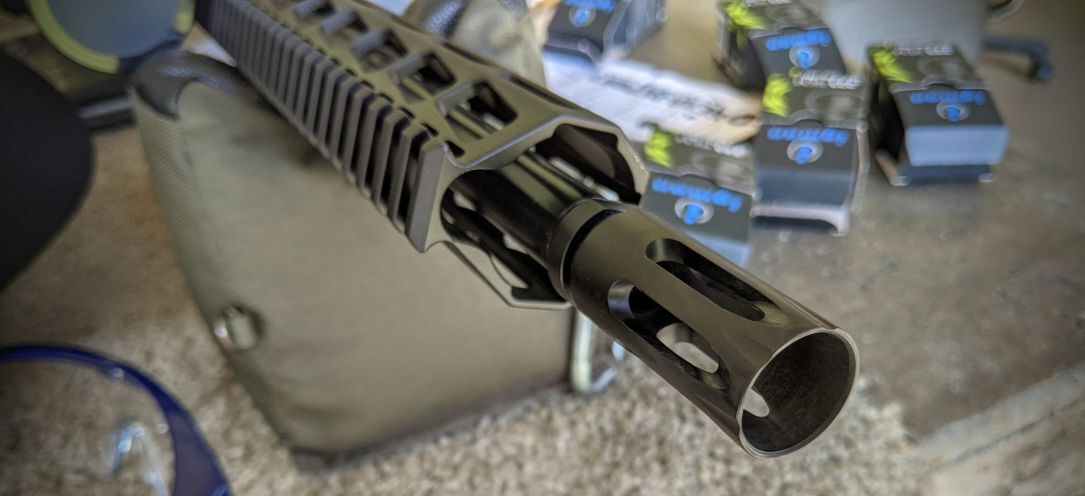
Suppressor Integration and Enhancements
-
Quick-Detach (QD) Mounts:
-
Efficiency: Systems like SilencerCo ASR streamline suppressor swaps, ideal for tactical transitions.
-
Backpressure Solutions: Designs like the HuxWrx Ventum 762 integrate flow-through technology, reducing gas-to-face by up to 70% in high-backpressure setups.
-
Legal Considerations:
-
State Bans: Suppressors remain prohibited in CA, NY, IL, DE, HI, RI, and VT.
-
Hunting Legality: Permitted in 41 states (e.g., TX, FL, GA), but verify caliber-specific game regulations.
-
Budget-Conscious Build Strategies
-
DIY Assembly:
-
Cost Savings: Aero Precision’s $600 builder kits enable custom .300 BLK pistols at 30% below pre-built prices.
-
Flexibility: Mix-and-match components (e.g., barrels, bolts) to prioritize cost or performance.
-
Pre-Owned Market:
-
Value Finds: Police trade-ins (e.g., Sig Rattler) often sell below retail on platforms like Guns.com.
The 7 Best .300 Blackout AR Pistols & Rifles in 2025
Premium Models for Tactical and Home Defense
1. Daniel Defense DDM4 PDW 300:
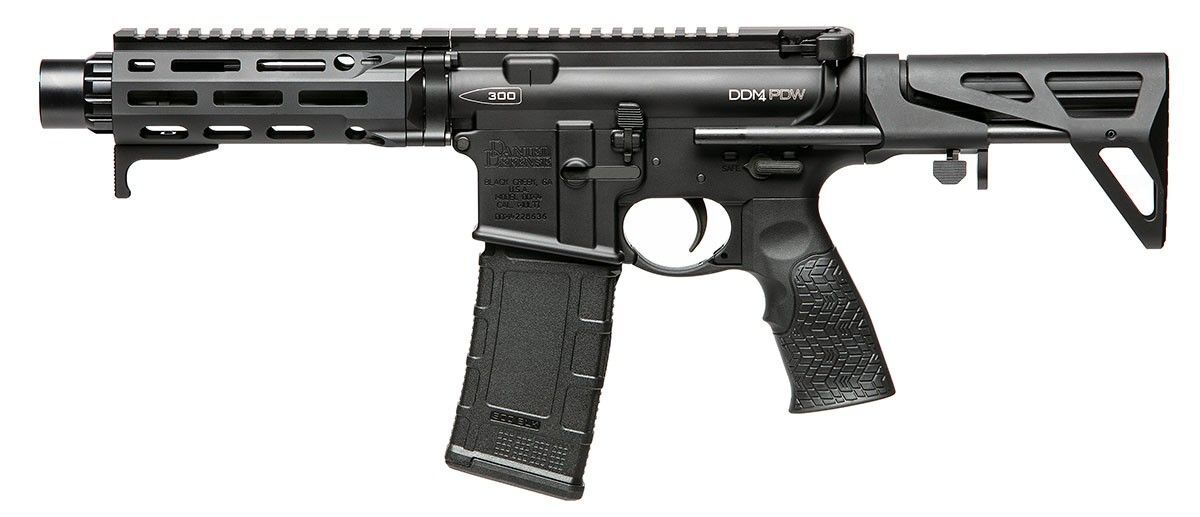
- Specs: 7” cold hammer-forged barrel, Maxim Defense brace, adjustable gas block.
- Features: Titanium nitride BCG (2025 model) for reduced friction; optimized for suppressed home defense.
- Pros: Ultra-reliable, compact design.
- Cons: Premium pricing ($2,400).
2. Sig Sauer MCX-Spear LT:

- Specs: 9” barrel, folding stock, M-LOK handguard.
- 2025 Upgrades: Enhanced recoil mitigation system and Sig suppressor compatibility.
- Pros: Modularity, ambidextrous controls.
- Cons: Weight (7.2 lbs unloaded).
Value-Driven and Modular Platforms
3. PSA Jakl:
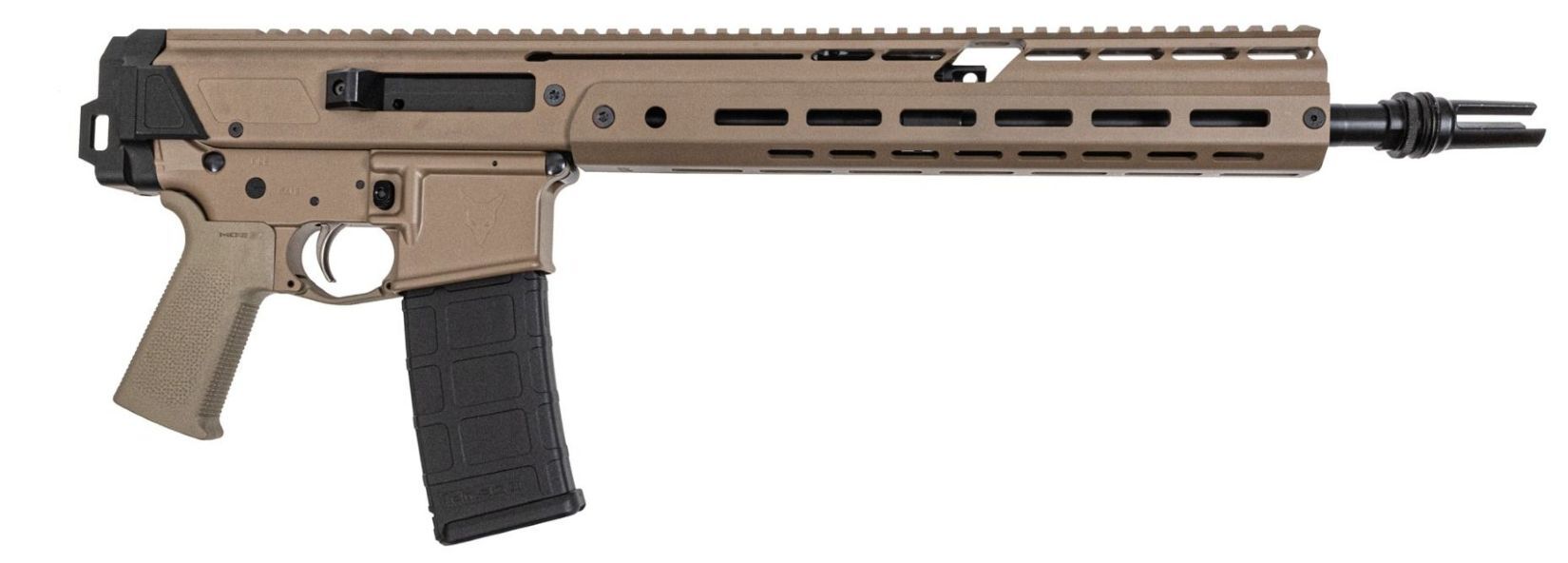
- Specs: 8.5” piston-driven barrel, non-reciprocating charging handle.
- Advantages: Low maintenance, reduced fouling from piston operation.
- Drawbacks: Limited aftermarket support.
4. Aero Precision EPC-9 (300 BLK Conversion):

- Specs: 10.5” barrel, LRBHO compatibility.
- Flexibility: Swap calibers via barrel changes; ideal for beginners.
- Tuning Note: May require adjustments for subsonic cycling.
Specialized and High-Performance Firearms
5. Q Honey Badger SD:
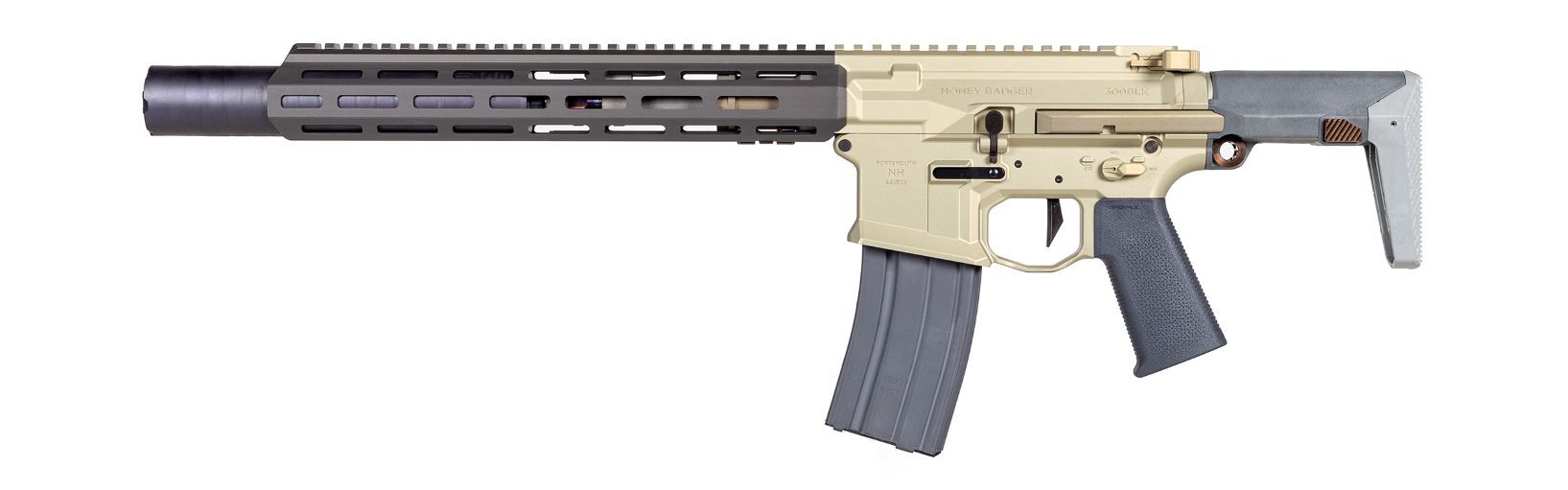
- Specs: 7” barrel, integrated suppressor, honeycomb rail.
- 2025 Updates: "SD-2" model reduces backpressure for quieter operation.
- Pros: Sub-MOA precision, compact stealth design.
- Cons: $3,500+ (includes tax stamp).
6. Springfield Armory Saint Edge PDW:
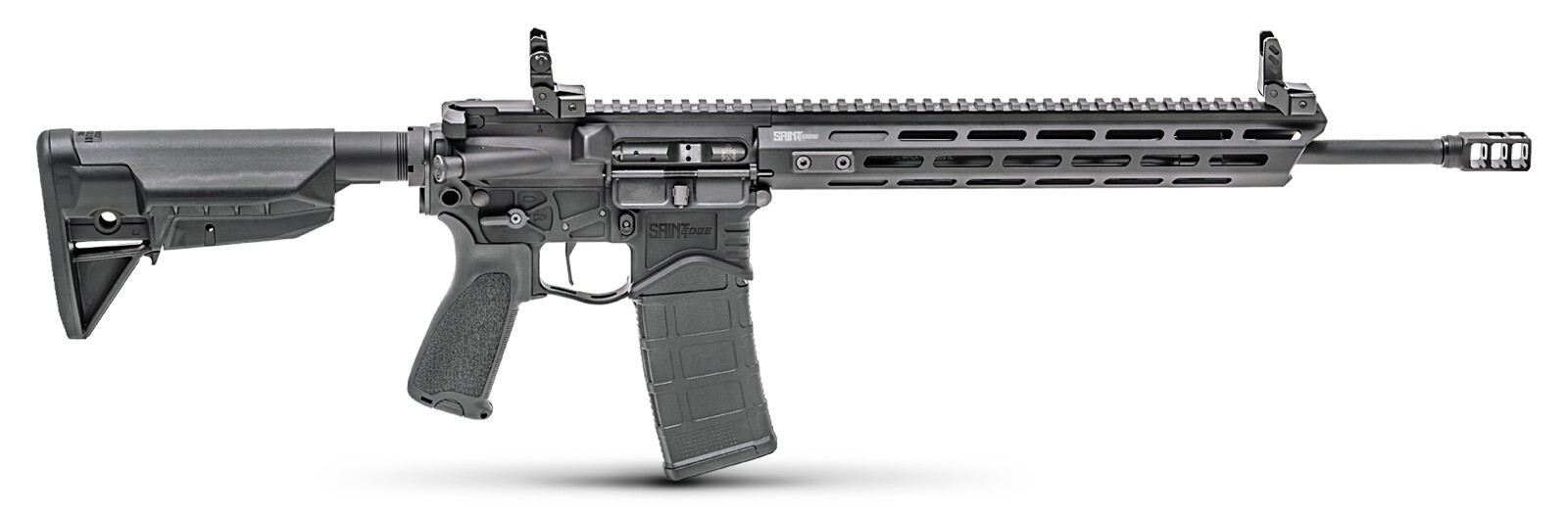
- Specs: 7” barrel, SB Tactical brace, Cerakote finish (2025).
- Pros: Ready-to-shoot design, mid-range price ($1,600).
- Cons: Gas block susceptible to carbon buildup.
7. CMMG Banshee 300 BLK AR Pistol
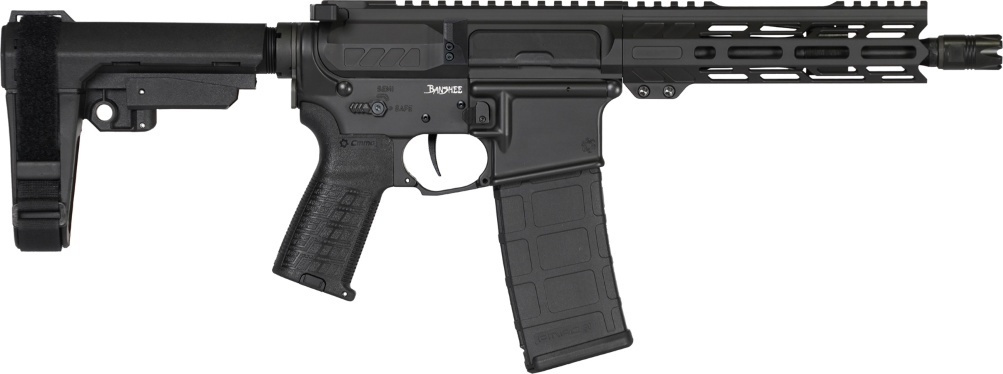
- Specs: 9″ match-grade, fluted barrel, direct impingement operating system, Integrated MIL-STD rail.
- Pros: Accessory integration, finely tuned trigger.
- Cons: Barrel length trade-offs
Key Note: Prioritize barrel length and gas system alignment with your primary use case (CQC, hunting, suppression). While premium models offer out-of-the-box reliability, budget builds and conversions provide cost-effective alternatives. Stay informed on evolving suppressor laws and always cross-reference state regulations.
Buyer’s Guide:
Purpose:
-
Home Defense: Prioritize compactness + suppressor compatibility.
-
Hunting: Opt for 16" barrels + 1-6x LPVO scopes.
-
Plinking: Budget-friendly options like PSA Jakl.
-
Barrel Length:
-
7"-9": Ideal for suppressed setups.
-
10.5"-12.5": Balanced for supers/subs.
-
16"+: Better ballistics for hunting.
-
Gas System: Pistol-length systems handle subs better; mid-length for supersonic rounds.
-
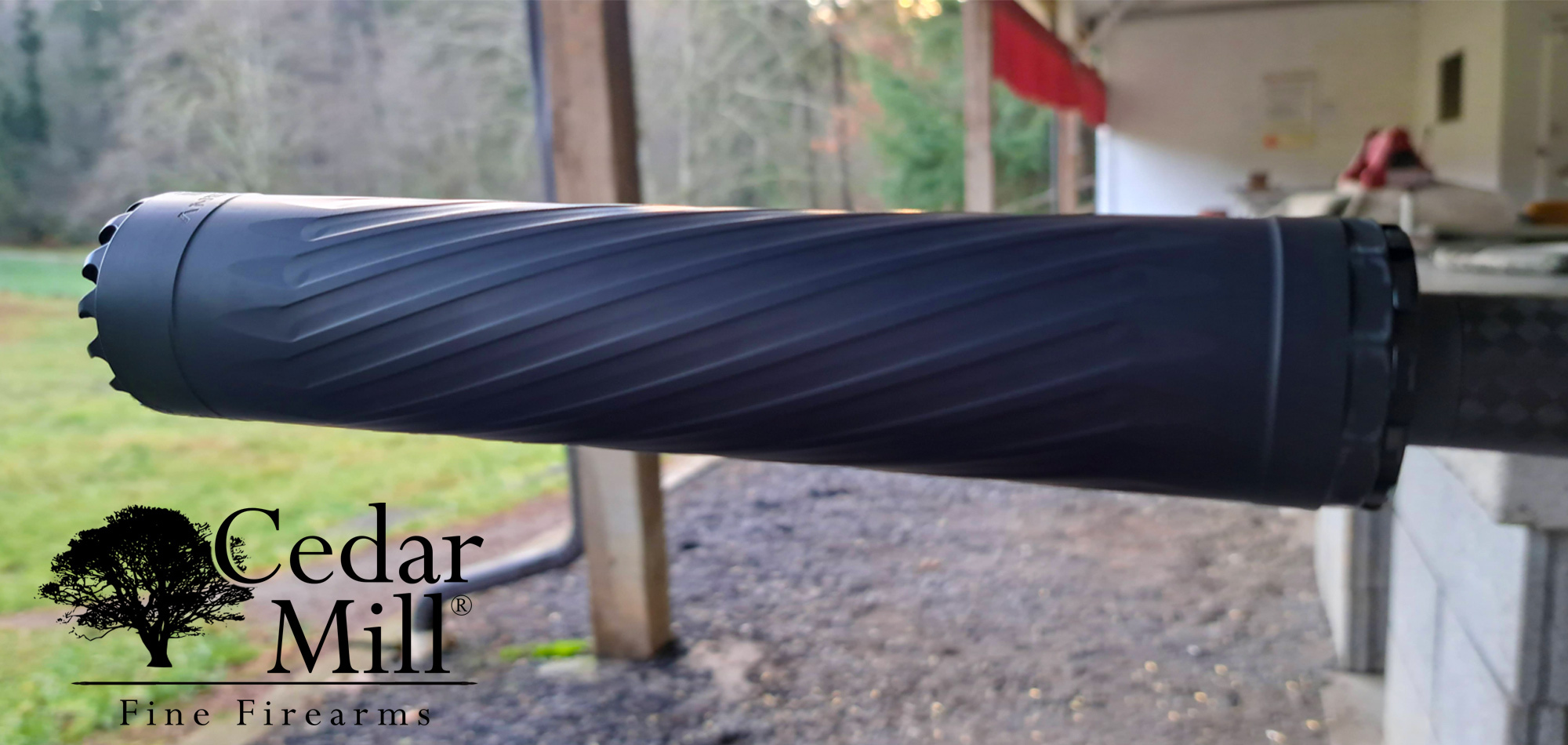
Suppressor Readiness: Look for threaded barrels (1-3/8″-24) and adjustable gas blocks like Anechoic.
2025 Trends Shaping the .300 BLK Market
-
The Rise of “Smart” Firearms
-
Biometric Safes: Vaultek’s new Smart Mag pairs with ARs, locking the bolt unless the shooter’s fingerprint is recognized.
-
App-Connected Scopes: The ATN Thor 5 uses Bluetooth to stream thermal footage to your phone.
-
3D Printing Goes Pro
Companies like Defense Distributed now sell ATF-compliant 80% lowers with pre-milled .300 BLK feed ramps.
-
Ammo Innovations
-
Green Ammo: Federal’s Eco-300 BLK uses lead-free primers and recycled brass.
-
Micro-Engraved Rounds: Serialized bullets (like Identilok) help law enforcement track stolen guns.
Final Thoughts: The Future of .300 BLK
The .300 Blackout AR platform is here to stay, blending versatility with raw power. Whether you’re a prepper, hunter, or tactical pro, our 2025 picks offer something for every need and budget.
From the rugged reliability of the Daniel Defense DDM4 PDW to the budget-friendly innovation of the PSA Jakl, each model serves a distinct purpose, ensuring there’s a perfect match for your needs and budget.
Key Takeaways for Buyers:
-
Prioritize Your Use Case: Compact 7” barrels (e.g., Q Honey Badger SD) excel in close-quarters, while 10.5”–16” configurations (like the BCM RECCE-9) balance range and precision.
-
Balance Performance and Budget: High-end options (Sig MCX-Spear LT) deliver cutting-edge features, while builds like the Aero Precision EPC-9 offer affordability without sacrificing customization.
-
Stay Compliant: With evolving ATF regulations, always verify state and federal laws regarding braces, and NFA items classifications before purchasing or modifying your firearm.
-
Plan for the Future: Emerging technologies, such as reduced-backpressure suppressors and modular designs, hint at exciting advancements.
The .300 Blackout isn’t just a cartridge; it’s a platform that evolves with its users. Whether you’re securing your home, hunting in the backcountry, or training for tactical scenarios, your ideal AR is on this list. Choose wisely, stay informed, and shoot confidently.
Got Questions? Drop a comment below or share your own .300 BLK experiences. Don’t forget to bookmark this guide.
FAQs
Q: Can I use 5.56 magazines for .300 BLK?
A: Yes, but Palmetto State Armory’s .300 BLK-specific mags with sharper feed lips reduced jams by 90%.
Q: What’s the best optic for a .300 BLK AR pistol?
A: For home defense: Holosun 510C (wide window). For hunting: Primary Arms 3x prism (BDC reticle).
Q: How often should I clean my .300 BLK?
A: After 300 rounds of shooting suppressed. Use a BoreSnake and Slip 2000 cleaner—You can restore a filthy BCM RECCE-9 to 0.8 MOA in 10 minutes.
Q: Are polymer lowers reliable for .300 BLK?
A: The KE Arms KP-15 handled 1,000 rounds flawlessly, but stick to metal for SBRs.