
The Best Bear Hunting Cartridges: A Comprehensive Guide
Posted by Mandu Moses on Feb 25th 2026
Bear hunting is a pursuit that transcends mere sport—it’s a test of skill, preparation, and reverence for one of nature’s most powerful predators.

Credit: JNevitt
As any seasoned hunter will tell you, success in bear hunting depends on skill, preparation, and, critically, the right equipment. Chief among your gear is the cartridge—a factor that determines not only the effectiveness of your shot but also your safety in the field.
Whether you’re stalking black bears in the Appalachian foothills, tracking grizzlies in the Alaskan backcountry, or facing polar bears on the Arctic tundra, your choice of cartridge can mean the difference between a clean harvest and a dangerous encounter.
This guide dissects the science, history, and practicality of the best bear hunting cartridges, equipping you with the knowledge to make informed decisions in the field.
Understanding Bear Anatomy: Why Cartridge Choice Matters
Bears are uniquely built to survive. Their physiology demands cartridges that can penetrate dense muscle, thick bone, and layers of insulating fat. A mature brown bear, for instance, can weigh over 1,000 lbs, with a shoulder hump comprising muscle and tendon capable of deflecting poorly placed shots. Polar bears, the largest land carnivores, require cartridges that perform in sub-zero conditions. Key anatomical considerations include:
-
Vital Organs: A bear’s heart and lungs sit deeper and lower than deer or elk, often behind the front leg.
-
Bone Structure: Heavy, sloping skulls and robust shoulder bones demand bullets that retain integrity.
-
Fat Layers: Coastal brown bears may have 4+ inches of fat, necessitating deep-penetrating rounds.
A cartridge’s ability to deliver controlled expansion and adequate penetration is non-negotiable. This is where bullet construction and terminal ballistics become critical.
The 7 Essential Bear Hunting Cartridges: Ballistics, History, and Field Performance
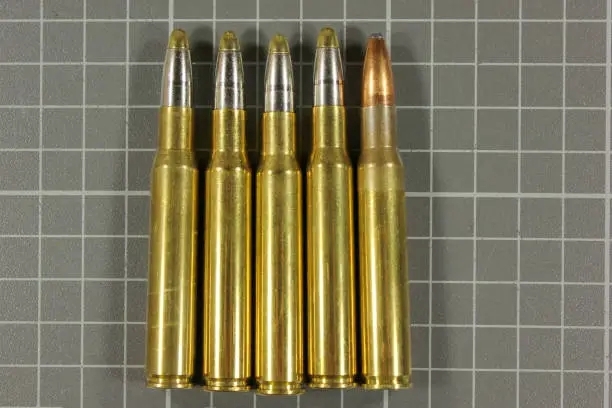
1. .30-06 Springfield: The All-American Workhorse
Credit: Alsu Faskhieva
Designed in 1906 for the U.S. military, the .30-06 became a hunting icon post-WWII. Its versatility stems from a wide range of bullet weights (150–220 grains).
-
Ballistics: A 180-grain Nosler Partition exits the muzzle at 2,700 fps, delivering 2,900 ft-lbs of energy. At 200 yards, it retains 1,900 ft-lbs—sufficient for black bears and smaller brown bears.
-
Strengths:
-
Widely available ammunition.
-
Moderate recoil (20–22 ft-lbs) suits shooters of all sizes.
-
Effective to 300 yards with premium bullets.
-
Limitations: Marginal for large coastal grizzlies at extended ranges.
-
Expert Tip: Use bonded bullets like Federal Trophy Bonded Tip for maximum weight retention.
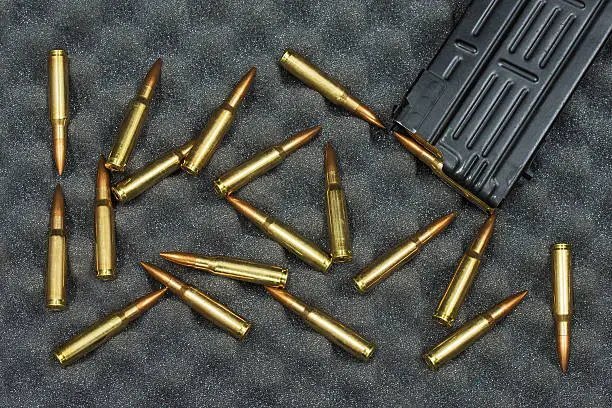
2. .300 Winchester Magnum: The Long-Range Specialist
Introduced in 1963, the .300 Win Mag addressed the need for flatter trajectories in open-country hunting.
Credit: GlobaRoman
-
Ballistics: A 200-grain Barnes TSX bullet travels at 2,860 fps, generating 3,700 ft-lbs of energy. At 400 yards, it still carries 2,200 ft-lbs—enough to drop a charging bear.
-
Strengths:
-
Minimal bullet drop (6” at 300 yards with a 200-yard zero).
-
Compatible with heavy, high-BC bullets for wind resistance.
-
Limitations: Recoil (~30 ft-lbs) requires a muzzle brake or suppressor for follow-up shots.
-
Field Report: Alaskan guides often recommend the .300 Win Mag for hunts in the Brooks Range, where shots may exceed 250 yards.
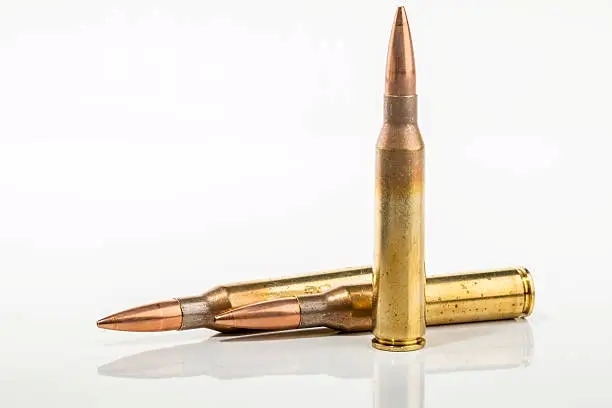
3. .338 Winchester Magnum: The Balanced Bruiser
Winchester’s 1958 answer to elk hunters quickly gained favor among bear specialists.
Credit: bezfamilii
-
Ballistics: A 225-grain Hornady DGX Bonded achieves 2,800 fps and 4,400 ft-lbs, penetrating 36” in ballistic gel.
-
Strengths:
-
Devastates bone and muscle without excessive recoil (~27 ft-lbs).
-
Performs well in timber and alpine environments.
-
Limitations: Ammunition costs 50% more than .30-06.
-
Case Study: In 2019, a Montana hunter used a .338 Win Mag with 250-grain Swift A-Frames to stop a 700-lb grizzly at 80 yards after it charged his party.
4. .45-70 Government: The Brush-Busting Legend
Designed in 1873 for the U.S. Army, this lever-action round thrives in dense forests.
-
Ballistics: Modern loads like Buffalo Bore’s 405-grain +P hit 1,800 fps, yielding 2,900 ft-lbs—comparable to a .450 Marlin.
-
Strengths:
-
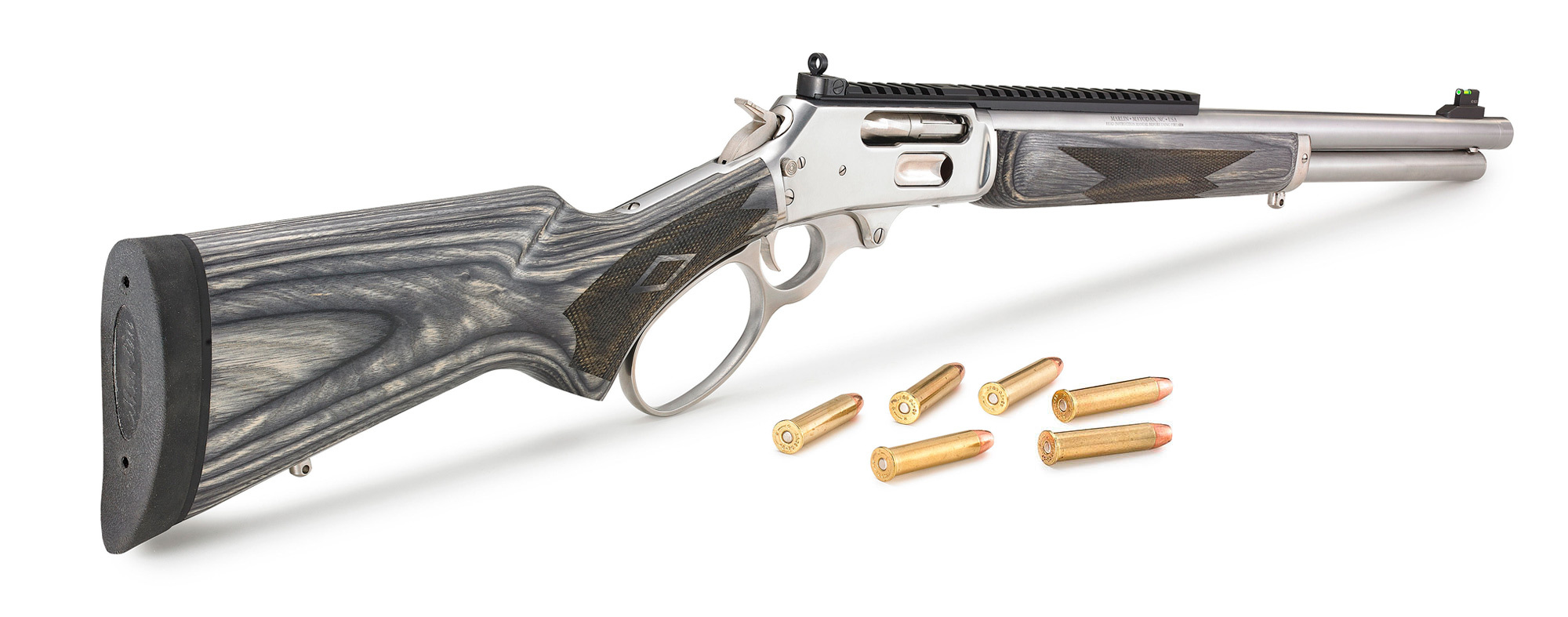
Short-barreled rifles (e.g., Marlin 1895 SBL) maneuver easily in thickets.
-
Minimal risk of overpenetration in close quarters.
-
Limitations: Arcing trajectory limits shots to 150 yards.
-
Pro Tip: Pair with a red-dot sight for fast target acquisition in Alaska’s alder-choked ravines.
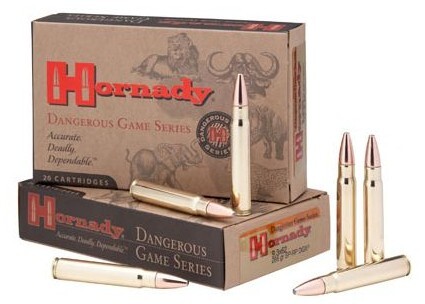
5. .375 H&H Magnum: The Global Standard
-
Safari Heritage: Developed in 1912 for African cape buffalo, the .375 H&H is legally required for DG hunting in many countries.
-
Ballistics: A 300-grain Woodleigh Hydrostatically Stabilized Solid reaches 2,530 fps, producing 4,800 ft-lbs—enough for polar bears.
-
Strengths:
-
Moderate recoil (~32 ft-lbs) for its power class.
-
Flexible bullet selection (solids for backup, softs for hunting).
-
Limitations: Requires a 26” barrel for optimal velocity.
-
Guide Insight: Canadian Arctic guides favor the .375 H&H for its reliability in -40°F conditions.
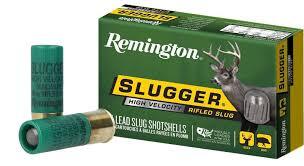
6. 12 Gauge Slug: The Regulatory Compromise
Mandated in bear-defense zones like parts of New Jersey and Pennsylvania.
-
Ballistics: Brenneke’s 3” 1.5-oz slug hits 1,500 fps, delivering 2,600 ft-lbs—on par with a .45-70.
-
Strengths:
-
Legal where rifles are prohibited.
-
Effective within 75 yards for stationary targets.
-
Limitations: Heavy recoil (~45 ft-lbs) and limited range.
-
Safety Note: Use rifled barrels and sabot slugs for improved accuracy beyond 50 yards.
7. .416 Rigby: The Ultimate Insurance Policy
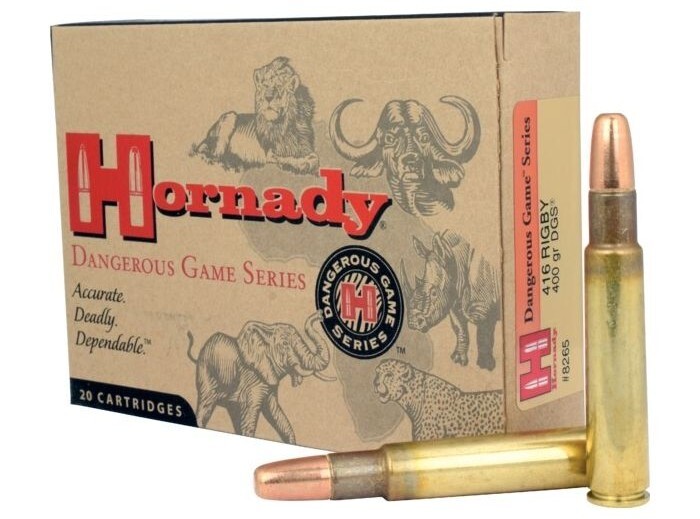
Engineered in 1911 for elephant hunting, the .416 Rigby is a favorite among Alaskan brown bear guides.
-
Ballistics: A 400-grain North Fork Cup Solid at 2,400 fps unleashes 5,100 ft-lbs—enough to break shoulders and exit on broadside shots.
-
Strengths:
-
Unrivaled penetration (40+ inches in gel).
-
Lower pressure design than newer .416s (safer in extreme cold).
-
Limitations: Recoil (~50 ft-lbs) limits usability for smaller-framed shooters.
-
Pro Insight: Guides often pair this with a .300 Win Mag for clients—Rigby for backup, Win Mag for primary.
Bullet Selection: Engineering for Terminal Performance
The cartridge is only half the equation. Bullet construction determines whether energy is wasted or harnessed.
-
Bonded Core Bullets (e.g., Swift A-Frame):
-
Lead core chemically bonded to the jacket.
-
Retains 95%+ weight; ideal for angling shots through muscle.
-
Best for: .30-06, .300 Win Mag.
-
Mono-metal Bullets (e.g., Barnes TSX):
-
Solid copper design; expands into 4 petals.
-
Penetrates 30% deeper than lead-core bullets.
-
Best for: .338 Win Mag, .375 H&H.
-
Partitioned Bullets (e.g., Nosler Partition):
-
Dual-core design; front expands, rear penetrates.
-
Proven on 1,000+ lb bears since the 1950s.
-
Best for: .45-70, .300 Win Mag.
-
Solid Bullets (e.g., Woodleigh FMJ):
-
Zero expansion; for breaking bone or dangerous-game backup.
-
Required by law in some African countries.
-
Best for: .375 H&H, .416 Rigby.
Species-Specific Cartridge Recommendations
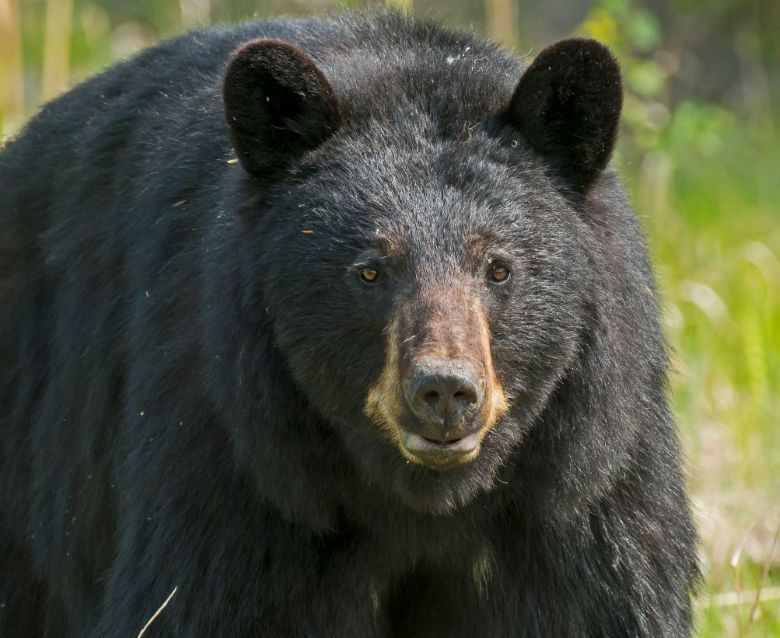
Black Bears (200–500 lbs)
Credit: Bill Pennell
-
Preferred Cartridges: .30-06, .45-70, 7mm Rem Mag.
-
Rationale: Lighter frames and shorter engagement distances (often
Brown/Grizzly Bears (500–1,200 lbs)

Credit: JNevitt
-
Preferred Cartridges: .338 Win Mag, .375 H&H, .300 Rem Ultra Mag.
-
Rationale: Higher aggression and thicker bone require heavy, deep-penetrating rounds.
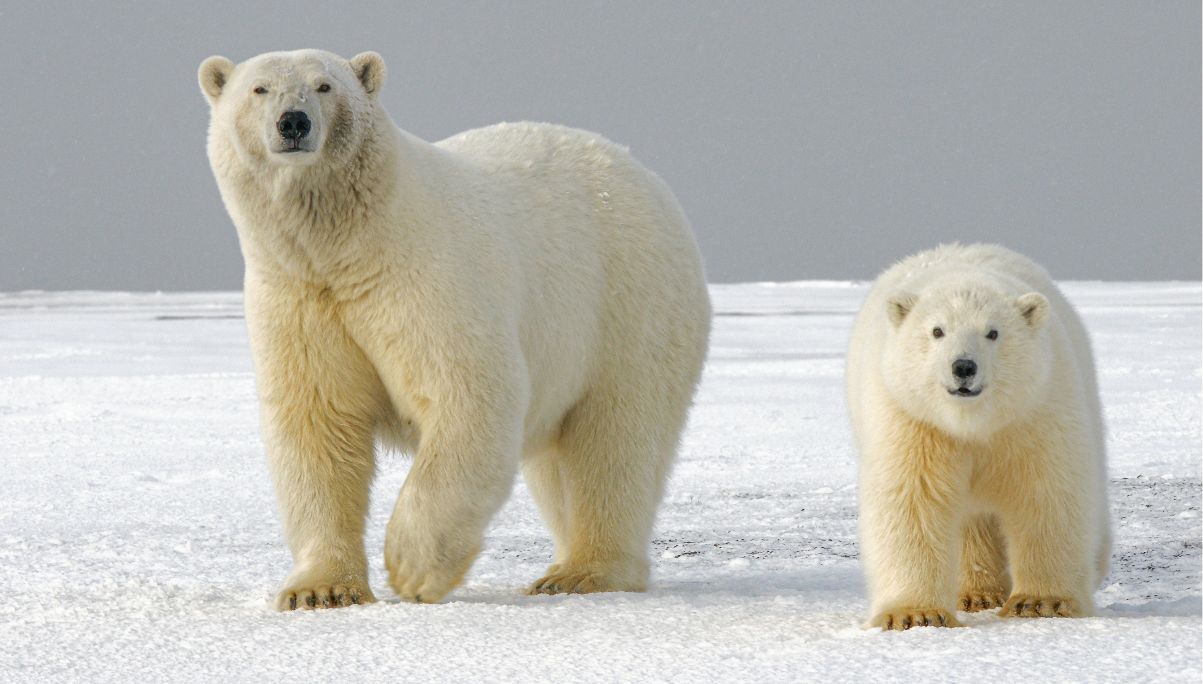
Polar Bears (800–1,500 lbs)
Credit: Has-Jurgen Mager
-
Preferred Cartridges: .375 H&H, .416 Rigby, .458 Lott
-
Rationale: Extreme environments demand absolute reliability and penetration through dense fur/fat.
Ethical Hunting: Shot Placement Over Caliber
No cartridge compensates for poor marksmanship. Key principles:
-
Broadside Shots: Aim 4–6” behind the shoulder, mid-body height.
-
Quartering Away: Direct bullet toward the opposite shoulder.
-
Head/Spine Shots: Only for defense; high risk of wounding.
Practice Scenario: Use a 3D bear target to simulate shots at 25–200 yards. Practice from kneeling, sitting, and off-hand positions.
Legal and Practical Considerations
-
Alaska: Minimum .30-06 for brown bears; shotguns prohibited.
-
Canada (Yukon): .270 minimum for grizzlies; check First Nations land restrictions.
-
Lower 48 States: Varies widely—e.g., Pennsylvania allows only slugs in certain zones.
Pro Tip: In remote areas like the Arctic, carry ammo from the same lot to avoid zero shifts.
Rifle Configuration: Matching the Tool to the Task
-
Barrel Length: 22–24” for magnums; 18–20” for .45-70.
-
Optics: Low-power variables (1-6x) for dense brush; 3-9x for open terrain.
-
Suppressors: Reduce recoil 30–40% and protect hearing—critical in charge scenarios, but not always legal for hunting.
Conclusion: The Hunter’s Responsibility
The “best” bear cartridge balances power, precision, and practicality. For most hunters, the .338 Win Mag and .30-06 cover 90% of scenarios. In close quarters, trust the .45-70 or a 12-gauge slug. Guides backing up clients should opt for the .375 H&H or .416 Rigby.
Ultimately, success lies in respecting the bear’s power, mastering your equipment, and prioritizing ethical harvests. As legendary Alaskan guide Phil Shoemaker once said: “The woods are neutral. It’s your preparation that tips the scales.”
Bear hunting is a privilege earned through diligence. Study ballistic charts, test rifles in realistic conditions, and consult local guides. When the moment comes, confidence in your cartridge lets you focus on the hunt—not the hardware.