
Building a Coyote Hunting Rifle Setup: Day and Night Configuration
Posted by Cedar Mill Fine Firearms on Aug 19th 2026
Building a Coyote Hunting Rifle Setup: Day and Night Configuration
Short answer: build around a Bergara B-14 HMR in 6.5 Creedmoor for daylight precision and use an AR-15 in 6mm ARC or .223 paired with an X-Vision Impact 150 thermal scope for night work. Two rifles for two distinct hunting modes is the answer that wins on both effectiveness and budget. Here's the full build, from rifles through calls and ammunition.
Key takeaways
- Coyote hunting is two different sports: daylight precision shooting and nighttime thermal-assisted close work.
- A bolt-action precision rifle handles long daylight shots; an AR-15 with thermal handles fast-paced night work.
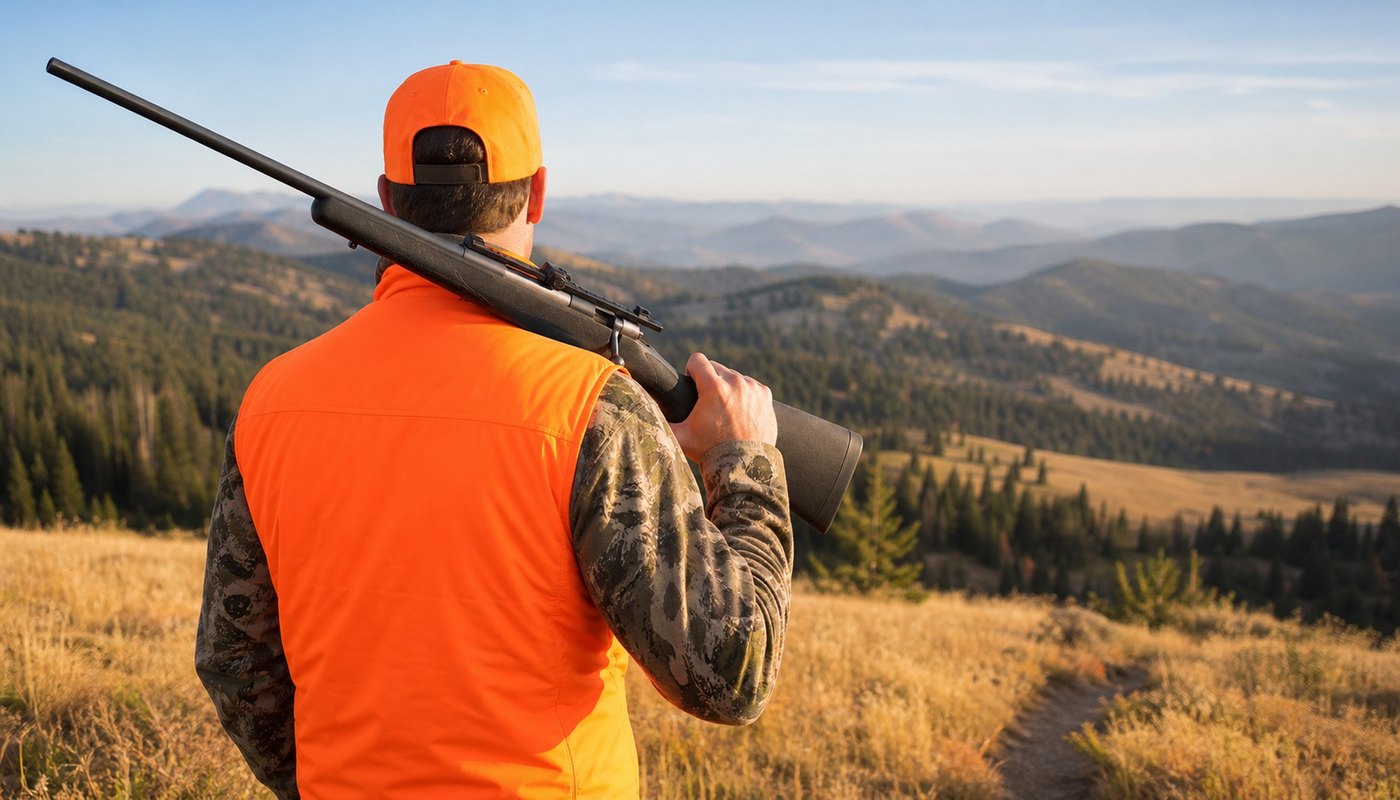
- The Bergara B-14 HMR Carbon Wilderness in 6.5 Creedmoor is the daylight workhorse.
- The X-Vision Impact 150 thermal scope on an AR-15 covers the 75-200 yard night engagement window.
- Total realistic budget for both setups: $4,500 to $5,500 including ammunition for a season, now that the Impact 150 streets under $1,500.
Two-Rifle Strategy: Why Not Just One
One rifle for coyote hunting day and night sounds efficient. In practice, it's a compromise that costs you opportunities. Two reasons:

Daylight shots are long. Coyote calling at midday or early morning in open country produces shots at 200 to 400 yards. You want a bolt-action precision rifle in a flat-shooting cartridge like 6.5 Creedmoor, with a high-magnification daylight optic.
Night shots are fast and close. Thermal-assisted night hunting produces shots at 75 to 200 yards on targets that are moving and reactive. You want a semi-automatic rifle with a thermal scope, in a cartridge that handles fast follow-up shots without recoil disruption.
One rifle that tries to do both ends up doing neither well. Two purpose-built setups cost more up front but pay back in real-world results.
The Daylight Rifle: Bergara B-14 HMR Carbon Wilderness 6.5 Creedmoor
The Bergara HMR is the rifle I built around for daylight coyote work. Five reasons:
1. Sub-MOA accuracy out of the box. Coyote vital zones are small. A rifle that holds sub-MOA at 100 yards translates to 4-inch groups at 400 yards, which means clean shots on coyote-sized targets out to the edge of typical call distance.
2. 6.5 Creedmoor trajectory. The Creedmoor's flat trajectory means minimal holdover at coyote distances. In my B-14 HMR review, holdover at 300 yards was three inches with stock factory ammunition. At 400 yards, the Creedmoor still delivers enough energy for clean coyote kills.
3. 7.5-pound weight (Carbon Wilderness variant). Light enough to carry into and out of calling positions without fatigue. Heavy enough to settle on a bipod for a steady shot.
4. Sniper Gray Cerakote finish. Weather-tolerant for spring rain, summer humidity, and winter ice. Coyote hunting happens in conditions a hunting rifle has to survive.
5. Trigger quality. The Bergara trigger breaks clean with minimal creep, adjustable 2.8 to 4.4 pounds. A good trigger matters more on coyote vital zones than on deer because the margin for error is smaller.
Shop the Bergara B-14 HMR at Palmetto State Armory
Daylight rifle optic
For a 200-400 yard coyote rifle, a 4-16x44 or 5-25x50 first-focal-plane scope with a mil or MOA reticle is the right answer. Riton, Vortex Razor HD LH, and Maven RS-1 all sit in the $700 to $1,400 range and deliver the glass quality required for coyote-sized targets at distance.
Daylight rifle accessories
- Spartan Precision bipod (proven on the test rifle)
- Atlas or Harris bipod alternatives
- Quality scope rings (Contessa, Talley, ARC)
- Custom turret with calibrated dope for the Creedmoor
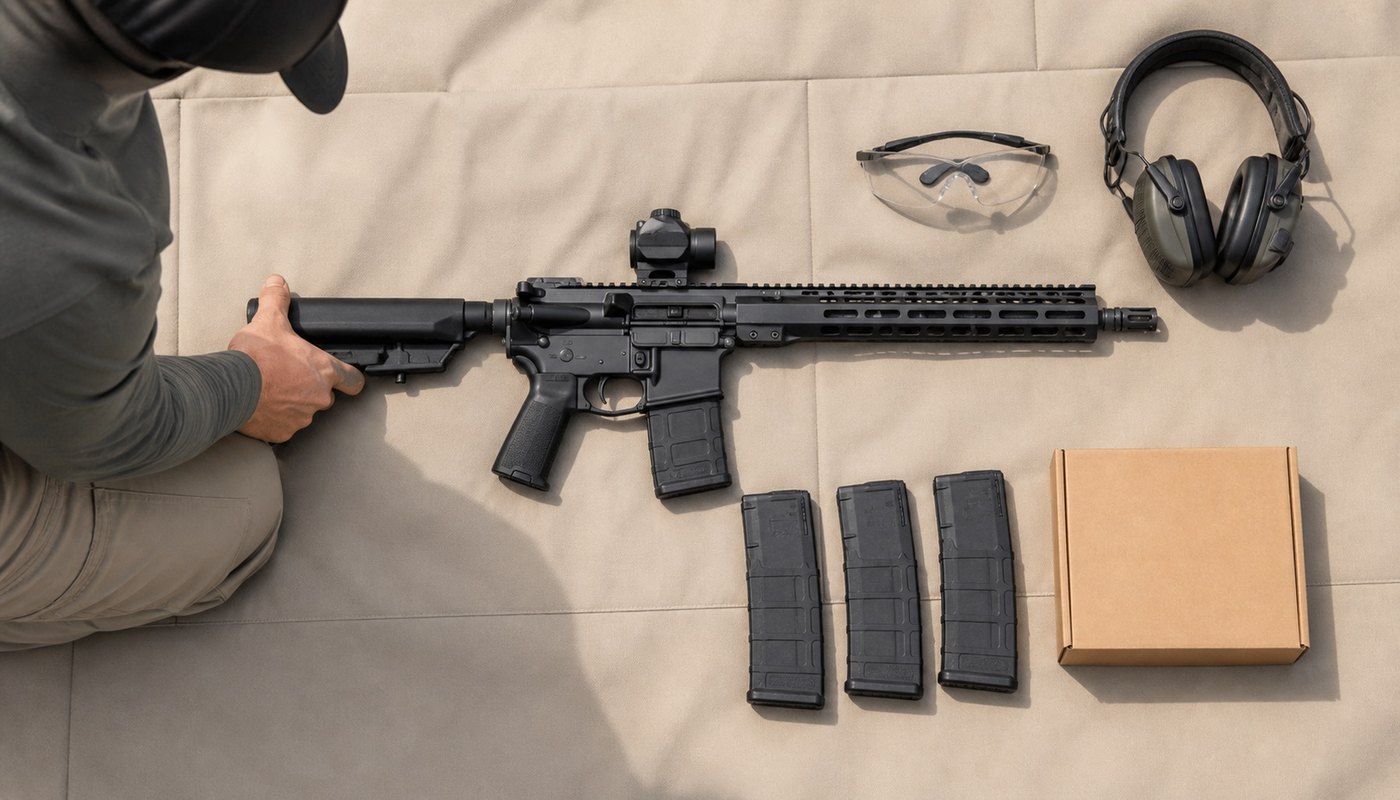
The Night Rifle: AR-15 with X-Vision Impact 150 Thermal
For night work, build around an AR-15 with the Impact 150 thermal scope.
Caliber options
Ranked for nighttime coyote work:
- 6mm ARC: Best overall. 108-grain ELD-M at 3,000 fps. Superior exterior ballistics versus .223 at 200+ yards. Lower recoil than .224 Valkyrie.
- .22 ARC: Hornady's newer .22-caliber AR cartridge. 88-grain ELD-M at 3,000 fps. Higher BC than .223.
- .224 Valkyrie: 1:7 or 1:6.5 twist. Excellent ballistics for 200-400 yard predator work.
- .223 Remington / 5.56 NATO: The standard AR-15 caliber. Effective inside 300 yards. Cheapest ammunition.
If you already own an AR-15 in .223 or 5.56, that rifle is sufficient for entry into nighttime coyote work. Upgrade to 6mm ARC or .22 ARC after you've decided this is a long-term pursuit.
The thermal scope
The X-Vision Impact 150 covers the night work effectively. Read our complete Impact 150 review and the coyote-specific application guide.
Key features that matter at night:
- 384x288 thermal sensor (the spec floor for serious work)
- 50 Hz refresh rate for tracking moving targets
- 1,100 yards detection range
- Freeze-frame feature for fast zero verification
- IP67 weatherproofing for outdoor durability
- 3-year warranty on the thermal unit
Shop the X-Vision lineup at OpticsPlanet
Night rifle accessories
- Suppressor (NFA item, recommended for second-shot success)
- Adjustable AR-15 stock for fast cheek-weld adjustment
- Vertical grip or angled grip for stable shooting from a sitting position
- Quality Picatinny rail for the thermal scope
- Spare 18650 lithium-ion batteries (carry 2 to 4 for an all-night session)
Calls and Sounds
Coyote calling is a separate skill set. Two main options:
Electronic call: FOXPRO, Lucky Duck, or ICOtec produce remote-controlled electronic callers with extensive sound libraries. Cost: $200 to $600. The advantage: you can place the call away from your position, drawing the coyote off your scent line.
Mouth call: Diaphragm, hand call, or howler. Cost: $20 to $50. The advantage: faster to deploy, no battery dependency, more skill-based.
Most successful coyote hunters use both. Electronic call for the primary stand, mouth call for backup and finishing.
Call sequence
Standard rabbit distress, fawn bleat, or mouse squeak sequences work in most regions. Two minutes of calling, three to five minutes of silence, repeat for 15 to 30 minutes before moving to a new stand. Coyotes may take 5 to 25 minutes to respond depending on distance, terrain, and pressure.
Ammunition
For the daylight Bergara in 6.5 Creedmoor:
- Hornady 140-grain ELD-M Match (target)
- Hornady 143-grain ELD-X Precision Hunter (hunting)
- Federal Gold Medal Berger 130-grain (target)
For the night AR-15 (caliber-dependent):
- .223 Remington: Hornady 55-grain V-MAX (varmint), 73-grain ELD-M (precision)
- 6mm ARC: Hornady 108-grain ELD-M, 105-grain Hornady BLACK
- .224 Valkyrie: Federal 90-grain Fusion, Hornady 88-grain ELD-M
Budget Breakdown
Daylight setup (target: $2,200 to $3,200)
| Bergara B-14 HMR (steel barrel, 6.5 Creedmoor) | $1,149 |
| Bergara B-14 HMR Carbon Wilderness (upgrade) | +$400 |
| Daylight optic (4-16x44, mid-range) | $700 |
| Scope rings + mount | $80 |
| Bipod (Spartan or Atlas) | $200 |
| First case of 6.5 Creedmoor ammo | $60 |
| Daylight subtotal | $2,189-$2,589 |
Night setup (target: $2,500 to $3,500)
| AR-15 rifle (PSA freedom or similar) | $700 |
| X-Vision Impact 150 thermal scope | $1,500 |
| Picatinny mount + tools | $120 |
| Spare batteries + charger | $80 |
| First case of .223 (or 6mm ARC) ammo | $50-$200 |
| Night subtotal | $2,450-$2,600 |
Optional additions
| Suppressor (NFA tax stamp + can) | $1,000-$1,800 |
| Electronic predator call | $200-$600 |
| Hunting clothing layers | $300-$600 |
| Quality bipod upgrade (Atlas, Spartan Pro) | $300-$500 |
| Range bag and ammunition storage | $80-$150 |
The Phased Build (If Budget Is Tight)
If $6,500 is more than you can spend at once, the phased approach gets you hunting in stages:
Phase 1: Daylight only. Bergara B-14 HMR with a daylight optic, $2,200 total. Hunt coyotes during early morning and late afternoon. This covers about 40 percent of the practical coyote hunting opportunities.
Phase 2: Add night capability. AR-15 with the X-Vision Impact 150, about $2,500 total addition now that the scope streets under $1,500. Now you can hunt 24-hour opportunity windows.
Phase 3: Refine. Suppressor, electronic calls, ammo selection. $1,500 to $2,500 over time. Diminishing returns but real improvements.
Most hunters who commit to coyote hunting reach Phase 2 within 18 months. Phase 3 happens over years as opportunities and budget align.
Legal Considerations
Coyote hunting laws vary widely:
- Year-round seasons in most states for coyote, but check.
- Night hunting laws vary; some states require permits, some prohibit night hunting entirely.
- Thermal scope laws are evolving; some states restrict thermal optics for hunting, especially on public land.
- Suppressor laws are federal NFA plus state regulations. Confirm both before purchase.
- Hunter orange may be required even at night in some states.
Check your state wildlife agency's regulations before any hunt.
What This Setup Doesn't Cover
The Bergara HMR plus AR-15 thermal combination is built specifically for coyote hunting. It is not optimized for:
- Hog hunting at distance: Step up to 6.5 Grendel in the AR for thicker-skinned hogs.
- Deer hunting beyond 600 yards: The 6.5 Creedmoor handles 600-yard deer cleanly but a 6.5 PRC or 7 PRC Bergara HMR would give you more retained energy at longer range.
- Bear or large game: Step to .300 Win Mag or larger.
- Long-range precision matches: The HMR Carbon Wilderness works for PRS at entry level but the heavier B-14R Crest or Premier Competition fits the bench-rest scene better.
Final Word
A Bergara B-14 HMR daylight rifle plus an AR-15 thermal rifle for night work is the right answer for serious coyote hunters who want to maximize their opportunity window. The two-rifle approach costs more than a single compromise rifle, but it pays back in cleaner shots, faster follow-ups, and more productive hunts.
For caliber depth on the Bergara HMR, see our B-14 HMR caliber guide. For thermal scope alternatives, see our best thermal scopes under $4,000 roundup. For the thermal-vs-night-vision question, see our thermal vs night vision for hunting comparison at Gear Report, then weigh that roundup against our best night vision monoculars under $500.